

The future of work just changed — again!
For the past five years, the conversation about the future of work has moved in waves. From where work happens – remote, hybrid, distributed teams – to how work gets done — collaboration platforms, digital workplaces, automation and more. Since the end of 2024, the focus has shifted to the role of generative AI, with personalized copilots promising productivity gains across every function.
But a quieter, more consequential shift is now underway. Artificial intelligence (AI) is moving beyond assistance and is beginning to act. We have entered the era of agentic AI — systems that do not simply generate content or summarize information but that can interpret goals, make bounded decisions, coordinate across systems and execute actions within defined guardrails. We now have the potential for a blended workforce of humans and AI agents.
Designing this model requires more than deploying tools. Most enterprises are experimenting with agents but very few are structurally prepared for what agents can achieve. Enterprises need to redesign themselves so they can operate safely, coherently and competitively in a world where execution itself is partially autonomous.
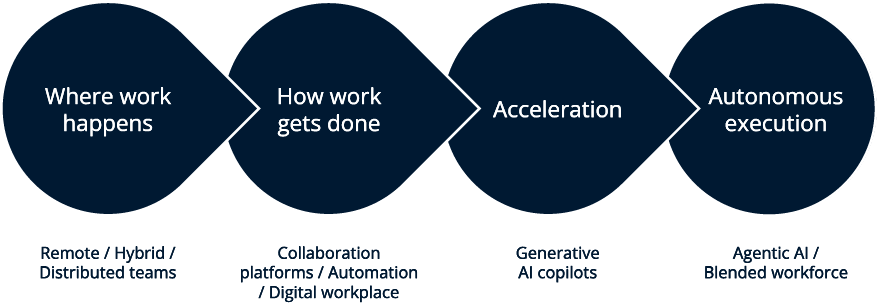
Figure 1: The Conversation about the Future of Work Is Changing
The Gap Between Excitement and Reality
Enthusiasm for agentic AI is real and, in many organizations, intense. Major enterprise software providers spent much of 2025 embedding agentic capabilities directly into their core platforms — not as optional add-ons, but as central features. ServiceNow launched its AI Agent Orchestrator in 2025 alongside thousands of pre-configured agents spanning IT, HR and customer service. Workday restructured 8.5% of its global workforce, in part, to redeploy investment toward AI development. These moves signal that the vendor ecosystem has already made its bet.
Yet the picture inside enterprises tells a more complicated story. According to ISG's State of Agentic AI Market report, 43% of agentic systems in production today are simple model-based agents, which are mostly task-focused rather than goal-based. In other words, nearly half of what gets called an "AI agent" in the enterprise is closer to a well-dressed workflow automation than a truly autonomous system. The path from pilot or proof of concept to scaled adoption is where most agentic initiatives are failing.
A smaller set of organizations has moved from experimentation to orchestration with agentic systems — while many others are still seeking consistent value from predictive AI or generative tools.
The early enterprise adopters offer a window into what this looks like in practice. One large technology company described running more than a dozen agentic proofs of concept that target composite business problems — end-to-end customer issue resolution spanning billing, entitlements and logistics — with a strict requirement that each carry a signed-off ROI from the relevant finance partner before moving forward. The mindset is instructive: initiatives with a clear business case.
A leading global biotech firm offers a more structural example – it merged its HR and IT leadership functions in 2025, which is a deliberate signal that, when AI becomes a genuine workforce participant, the traditional separation between people management and technology management no longer makes sense. The organizational chart must start to change before the technology delivers on the potential.
Please fill out this form to continue.
About the author
Preksha Dubey
Preksha has over 8 years of experience in Consulting for Strategic Outsourcing and Cost Optimization for clients across US, EMEA and APAC regions. She is based in Bangalore, India and in her current role in ISG, she is responsible for consulting global clients on sourcing strategy, digital transformation, cost optimization, process standardization, business case and commercial modelling.
Related stories