
Unlocking Growth through Strategic Services Procurement
Enterprises around the world are increasingly relying on external service providers to augment their operations and drive strategic growth. From the decades-old technical support domain to management consulting to marketing and finance, the service industry has grown to become an indispensable component of global business. For growing businesses, IT services procurement has become a strategic enterprise function.
Enterprise services encompass a broad spectrum of critical operational and technology-based functions, such as IT infrastructure, cloud platforms, cybersecurity, application support and managed business processes. But procuring these enterprise services can be quite an undertaking that demands a delicate balance between cost optimization, quality assurance and risk mitigation.
7 Procurement Pitfalls Growing Business Can’t Afford
Growing enterprises occupy a unique position in the market. They are beyond the startup stage but have yet to transition to the robust infrastructure and IT environment of a multinational organization. Growing businesses, or mid-tier organizations, are those with revenue between $50 million and $1 billion and roughly 500–5,000 employees. They face unique procurement challenges due to limited scale, resources and buying power compared to large enterprises. Identifying these challenges is the first step toward transforming procurement into a competitive advantage.
- Financial constraints: Procurement relies on capital reserves to make long-term strategic investments and operational expenditure. Because growing companies have financial constraints, they are typically more risk averse and need to focus their funds on immediate operational requirements.
- Talent shortage: Growing businesses need expertise in procurement specialities, including negotiations, industry-specific procurement standards and supplier agreement structures. Unlike established organizations that have deeper pockets to attract and retain specialized procurement talent, growing businesses often struggle to compete in the labor market for professionals with advanced procurement expertise. Insufficient internal skills can result in poor supplier management and unclear procurement procedures.
- Weakened leverage in negotiations: Large purchasing volumes and longer-term agreements can tilt the scale in favor of larger organizations when negotiating with suppliers. Without these, organizations can struggle to secure favorable pricing or service levels and service customizations. As illustrated in Figure 1, factors such as volume bundling, extended contract terms and multi-category deal structuring play a critical role in strengthening negotiation positions. Absent these, organizations may find themselves under increased sourcing pressure with limited room for trade-offs.
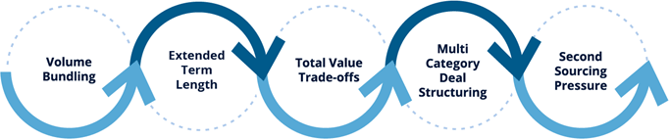
Figure 1: Negotiation Levers, Source: ISG - Underutilized digital tools: Investing in automated procurement systems is only effective if the tools are carefully implemented and seamlessly integrated into the organization’s ecosystem. Implementation challenges and integration complexities in growing businesses lead to a lack of transparency in ROI for technological investments. The World Economic Forum reports that approximately 25% of small- and medium-sized businesses say keeping up with the demands of technology and innovation is a top challenge.
- Compliance and risk management neglect: Mid-size players struggle to commit to risk management frameworks and instead take a reactive approach to compliance. This creates potential legal vulnerabilities and missed business opportunities. The lack of comprehensive risk management strategies or structured audit mechanisms can hamper business continuity and growth prospects.
- Scalability bottlenecks: Enterprises often reassess their procurement strategies to find that processes that worked at a smaller scale or during a growth stage have become a bottleneck as the company has grown. Scalable procurement capabilities support continued growth, yet an organization needs to achieve sufficient growth to justify investments in scalable systems. Increasing the supplier base, securing a robust technology infrastructure, expanding geographically and allocating adequate resources are some of the challenges growing enterprises face.
- Integration challenges: Mid-tier businesses that are restricted to a siloed approach often struggle with fragmented systems. A significant disconnect is often between procurement and finance departments, which can impact both operational efficiency and financial visibility. Another gap is often between procurement and IT, which can lead to shadow IT as departments bypass formal procurement channels.
The Procurement Paradox for Small- and Medium-Sized Businesses
Some of the above challenges are also faced by multinational organizations, but they often have the right tools and strategies to overcome them. Growing organizations need targeted strategies that address their unique procurement needs and establish a foundation for future scalability.
Preparing the Foundation: Evaluating Your Current IT Landscape
Before adopting advanced technology, developing organizations must assess their current tech landscape. This helps identify gaps, prioritize investments and align acquisitions with business goals. Start with the following four steps:
- Infrastructure inventory analysis: Identify all hardware, end-user devices, software, networking equipment, storage system and service components along with their current configuration, versions, age, warranty status and lifecycle position. This exercise will not only help you identify unmanaged or shadow IT assets but also standardize the process of assessing actual needs, making right-size acquisitions and maximizing the value of technology investments.
- Organizational health check: Internal structures, stakeholders and capabilities need to be aligned to effectively adopt, integrate and manage new IT services. This requires executive sponsorship and accountability for procurement decisions. Early on in the process, organizations should evaluate the procurement function’s maturity, project and change management skills and technical expertise in areas such as cloud, cybersecurity, data integration and service management. This will provide a realistic view of current capabilities and gaps before engaging in IT services procurement. It lays the foundation for better planning, smoother transitions and maximum value realization. A recent study assessing the readiness of mid-market organizations for Industry 4.0 adoption in the manufacturing sector highlighted significant disparities in preparedness levels. The research evaluated key factors such as digital infrastructure, employee skills, management support and investment capabilities. A procurement readiness assessment evaluates an organization’s preparedness for procurement changes and identifies gaps in people, processes and governance. To guide such assessments, frameworks like the Organizational Readiness Matrix (see Figure 2) help identify where an organization stands in terms of skill level and process maturity, and what targeted interventions are required across people, process and governance dimensions to drive procurement transformation.
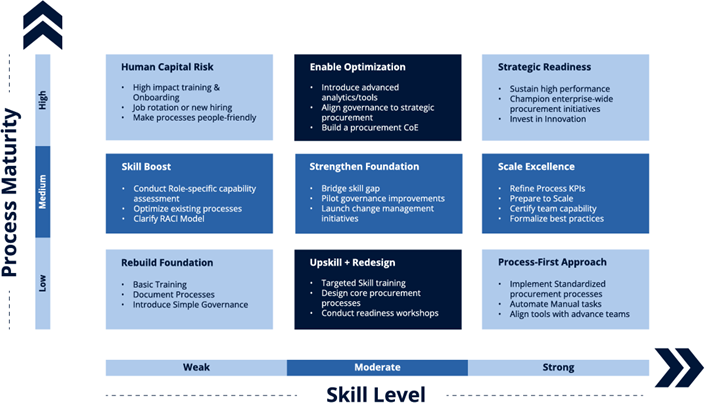
Figure 2: Operational Readiness Matrix framework with targeted interventions, Source: ISG - Evaluating security posture: For any organization, security and compliance considerations must be integral to procurement decisions. As organizations scale, their security risks multiply and their visibility as potential targets increases. In recent years, small businesses have increasingly become targets of cyberattacks, underscoring their vulnerability to data breaches and security threats. A company’s security strategy should align with its digital transformation initiatives to ensure security enables rather than impedes innovation. The lifecycle of a security posture assessment, as illustrated in Figure 3, provides a structured framework for identifying risks, planning remediation and continuously improving controls—critical steps for embedding security into the procurement process.
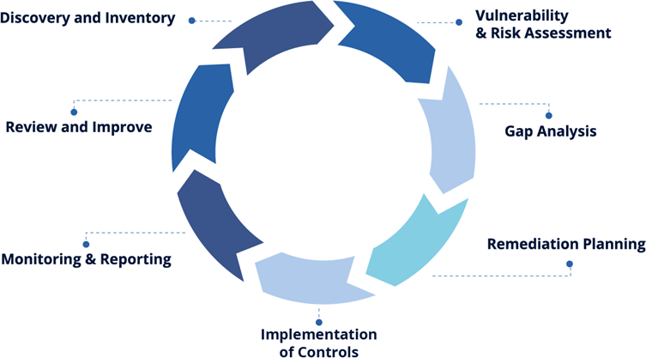
Figure 3: Lifecycle of Security Posture Assessment, Source: NIST SP 800-115 - Reviewing your supplier ecosystem: A comprehensive vendor and contract portfolio review is an essential part of assessing enterprise readiness for procuring new or optimized IT services. As businesses grow, vendor ecosystems can become fragmented, contracts outdated and service overlaps common — all of which can dilute value, increase risk and hinder scalability. A supplier ecosystem review provides visibility into the current sourcing environment and serves as a baseline for a strategic, future-ready procurement approach. Contracted vendors can charge different prices per unit and lead to savings leakage. Tracking IT services providers, evaluating vendors and addressing high-risk contracts help organizations cut inefficiencies, reduce risks and streamline enterprise procurement.
Please fill out this form to continue.
Related stories