More than 80% of enterprises in the automotive industry say they have a cloud architecture strategy or have been through a cloud implementation. And, while cloud promises to solve enterprise challenges with scale and flexibility, it is not the answer to all technology challenges. This is especially true in the automotive digital ecosystem.
In the ISG 2023 Smart Manufacturing Survey, only 26% of automotive companies had adopted edge computing and more than 50% were just adopting it or had not yet evaluated it. The data required to deliver connected vehicle driving and passenger services will reach and potentially surpass yottabytes. This is far greater than current enterprise infrastructure can handle. Yet the smart and autonomous vehicle depends on the promise of such computational power to be able to make the right safety and commuting decisions. Rather than using data that is sent across the cloud and internet, connected vehicles need immediate responsiveness to ensure safety, comfort and security for passengers, drivers and surrounding environments.
This means they will need a robust, well-connected and use-case-led architecture to define the purpose, management and cost of the data loads. Most organizations are at a crossroads with these issues. One solution includes a model that allows for both a distributed and symbiotic architecture that enables a comprehensive approach, with edge computing in mind.
Edge and Cloud Technologies Do Not Compete; They Are Symbiotic
While enterprise data is generated at the edge by Internet of Things (IoT) sensors and other technologies in greater and greater volumes, it relies on the cloud for comprehensive storage, processing and management. But the cloud is not efficient enough to handle the growing volume of data generated at the edge. This is where edge computing comes into play.
Edge computing pushes the computational infrastructure closer to the data source where it is needed, to address issues such as response time, data security and power consumption. Like cloud computing, edge computing allows compute, storage and applications to be consumed by end users, but edge computing has much greater geographical distribution and proximity to end users.
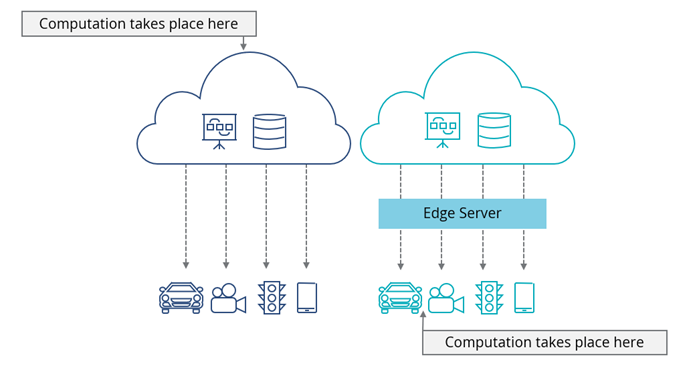
Figure 1: Cloud Computing vs. Edge Computing
Source: https://www.spiceworks.com/tech/cloud/articles/edge-vs-cloud-computing/
Edge computing is not a technology itself; it is an architectural approach to improve the performance of the overall environment. In a simple edge computing architecture, shifting computing power and storage to locations closer to the source of data can have an immense impact. Here is a simple graphic demonstrating an edge computing architecture and how it interfaces with the cloud layer to leverage foundational resources to process data closer to users and data sources.
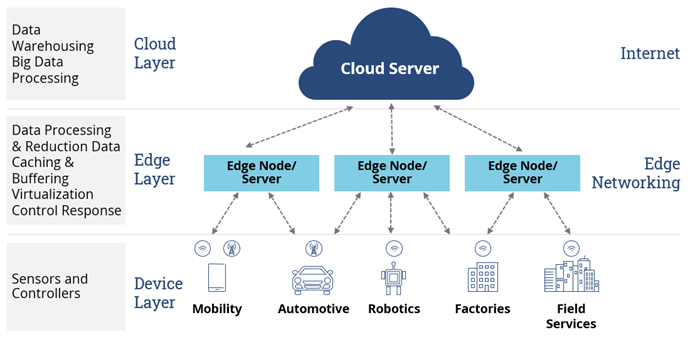
Figure 2: Simple Edge Computing Architecture
Source: https://www.wipro.com/infrastructure/edge-computing-understanding-the-user-experience/
Cloud computing complements an edge strategy by bringing tremendous synergies, including performance, scalability and flexibility to run modern IT architectures in an optimized and cost-effective manner.
Please fill out this form to continue.
Related stories