The Healthcare industry is as old as our earliest civilizations in Babylon and Mesopotamia. Thousands of years later, doctors still take the Hippocratic Oath to protect patients under the name of the earliest healthcare professional.
Of course, the practice of patient care has evolved over time, and in the last decade, we have seen a growing focus on “precision medicine.” What is precision medicine? According to Stanford Professor of Genetics Michel Snyder, this is medicine “entering the era of big data.” In Estonia, for example, a nation that has fast become known as digital-first, every citizen can track and share their data through a transparent blockchain eHealth system.
The era of big data has brought greater accessibility of health data to the patient, not just medical experts. According to the Edelman Trust Barometer Report, one in three people agreed that an average person can know as much as a doctor by doing their own research, and that this can be extended by input from wearables. The revolution in health data is being powered by “connected healthcare,” which combines digital health technologies.
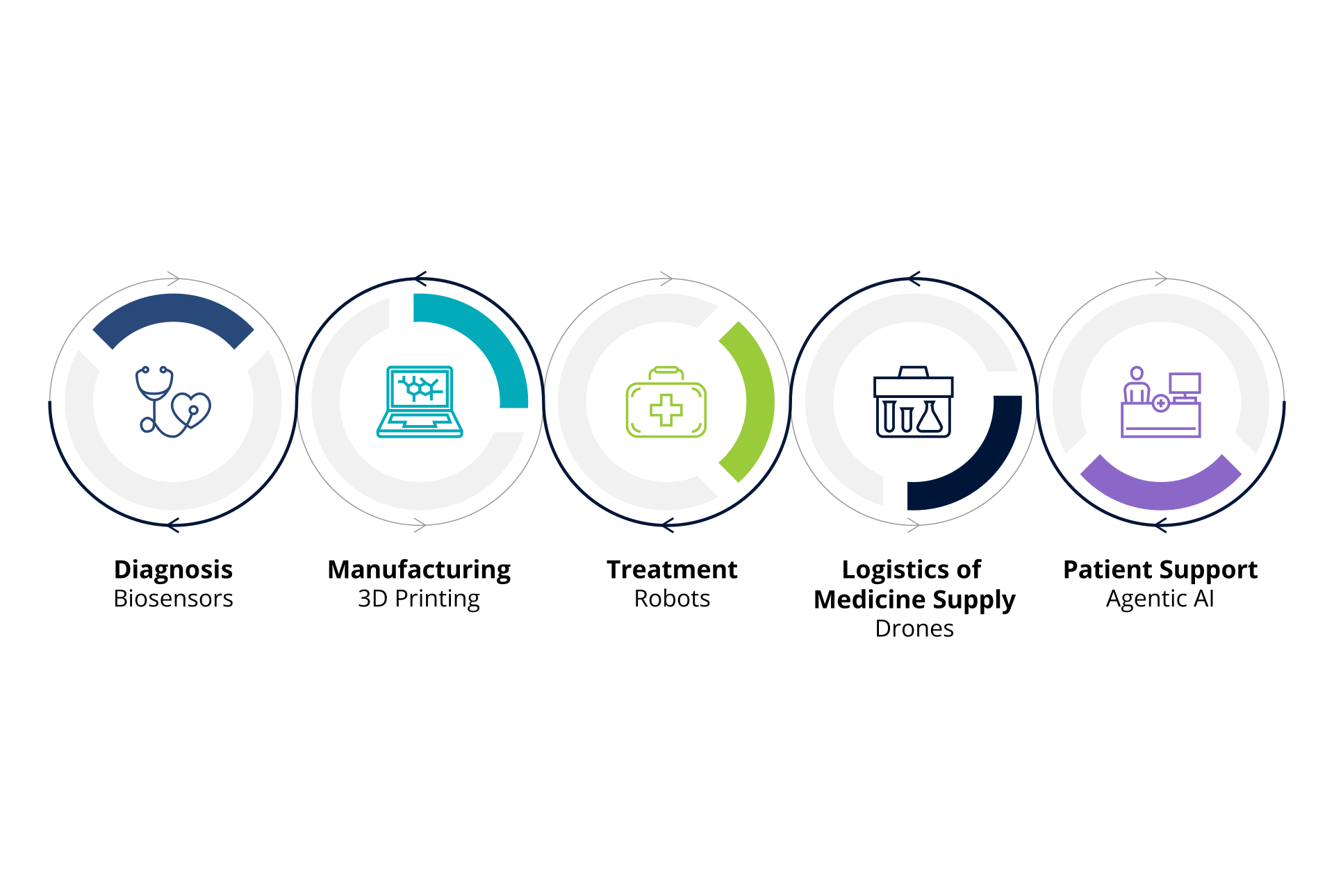
Figure 1: The Value Chain of Connected Healthcare;
Source: Poehler 2022
As a result, direct-to-consumer business models are dominating the Healthcare market. As technologies advance, individuals are increasingly generating their own data and monitoring factors such as physical activity, sleeping patterns, blood sugar levels and even skin conditions. This allows them to “bio hack,” a do-it-yourself approach to improving their health. With further developments in agentic AI, monitoring and interventions via healthcare wearables will be autonomous and customized.
How Data Changes the Business Model
This transformation in the way data is generated has turned healthcare into a big business. Organization for Economic Co-operation and Development (OECD) member countries are spending between seven and 10% of their GDP on healthcare services. The percentage of the GDP spent on healthcare in the U.S. will likely be closer to 17%. Wearable technologies alone are expected to grow into a market with an annual value of ~$160 billion USD.
In this context, the ecosystem of healthcare services providers is constantly expanding. And it’s no surprise that many non-traditional healthcare companies want to find a way into this expanding market. After all, the generation of patient data is contributing to a forming trillion-dollar industry.
Figure 2: Data Monetization Strategies - Let's Talk About Data Part 2 with Steve, Sunder and Kathy - YouTube
Of course, when non-traditional companies provide adjacent healthcare services, challenges arise. Health and fitness data-gathering platforms like Apple’s HealthKit and Google Fit are creating economic moats that protect their market share and lock users into their platforms. When direct-to-consumer genetic testing company 23andMe experienced a data breach, it exposed the highly sensitive data of 6.9 million users. Then, when it went into bankruptcy in September 2024, the data of its remaining seven million users became vulnerable as well. Though data advocates recognized this as a problem as early as 2018 when the company shared data with GlaxoSmithKline for the purpose of drug testing, little was done in response.
Unfortunately, these kinds of compromises are not uncommon across the digital health ecosystem. It has been discovered that, without appropriate security protocols, healthcare applications on mobile devices can leak sensitive data through APIs.
Please fill out this form to continue.
Related stories